A. Lapa. Types of Intellectual Property
Intellectual property is the result of the creation of the human mind
In our understanding, property is most often an apartment, a car, a country house, various things, and perhaps even animals.
These are so-called material objects that you can touch with your hands, that can be bought, sold, transferred, and so on.
What changes when we add the word "intellectual" to it? It remains the same kind of property: it can also be bought, sold, used, and the more of this property you have, the more objects you have, in exactly the same way. Its main difference is that it cannot be touched with your hands and it is always obtained through creative work.
That is why you cannot find a better definition than the one from the website of the World Intellectual Property Organization, and there it says: "Intellectual property is the result of the creation of the human mind."
Types of intellectual property
As applied to medical devices, you will encounter:
- copyright (any texts, videos, drawings, photographs)
- trademarks (the so-called protected brands, product names, logos and company names for which a certificate has been obtained from the office)
- patents (new products, methods, and uses of products or methods that have passed examination at the office)
- know-how (a production secret that is kept under lock and key and carefully protected inside the company from any outsiders)
Most often, questions about medical devices relate to patents and trademarks, and we will focus on them.
The main regulatory document on intellectual property
Civil Code of the Russian Federation, Part 4
What is a patent?
Imagine that you have invented something new. You worked toward it for a long time, studied, worked, and spent a lot of money, effort, time, tools, and reagents. Naturally, you want to earn money and recoup your efforts. And society gives you that opportunity.
You file a patent application, go through all the stages of examination, and are issued a patent, and with it you get the most important thing: rights. The right to use, the right to dispose, the right to prohibit. No one except you has such rights to your invention.
If someone tries to use this invention, you can sue them and demand money. At the same time, you, as the owner, can be approached at any moment for a license to use your invention.
A patent is a legal monopoly from the state (society) that grants rights to the patent owner (the developer of the invention). One of these rights is the right to prohibit another person from using the invention covered by the patent.
The main objectives of the patent system are to encourage the creation of innovations, the disclosure of information about innovations, and the commercialization of developments.
For more details: Civil Code of the Russian Federation, Part 4, Chapter 72. Patent Law
Features of patents
- There are different types of patents
Patents are issued for an invention, a utility model, and an industrial design - The development must be patentable
The development must meet the conditions of patentability. For inventions: novelty, inventive step, industrial applicability - Exclusive rights are territorial
Patents are issued for a specific territory. Rospatent issues patents of the Russian Federation, which are valid in the territory of the Russian Federation. Eurasian patents are also valid in the territory of the Russian Federation - Information about the development will be published and available to the general public
A patent will not be granted unless the object is described and shown in as much detail as possible, to the extent necessary for it to be reproduced - Temporary protection
Patents are valid for a limited period of time. Inventions are protected for 20 years, after which the patent passes into the public domain - Authors' rights and rights to remuneration
Patents always have authors, individuals who have the right to remuneration if their patent is used - Exclusive rights
The peculiarity is that authors are not always the right holders under the patent. If an author works under an employment contract for a company and develops inventions for it, the invention is a service invention and the rights remain with the employer company
Also, if the contract states that the developer is given money for the development, and the exclusive rights to the invention belong to the customer, then the customer will also be among the right holders
The main stages of obtaining any patent
Obtaining a patent begins with a patent search, to make sure that your developments meet the requirements of patentability, because patents are issued far from every development.
If the search has been carried out and you have not found similar developments, you can move on to collecting the documents for filing the application and writing the application itself.
Once the application is ready, it is filed with FIPS (the Federal Institute of Industrial Property) or the Eurasian Patent Office.
After the application is accepted, the examination process begins. It consists of a formal examination and a substantive examination, and as a result a patent is either issued or refused.
Depending on the object being patented, the whole process of obtaining a patent can take from 8 months to 2 years.
Industrial design patent
This is a patent issued for the appearance of a product. The appearance must meet the requirements of novelty and originality. Examples of such developments for medical devices can be the appearance of adhesive plasters, the design of equipment, the packaging of a product, and so on.
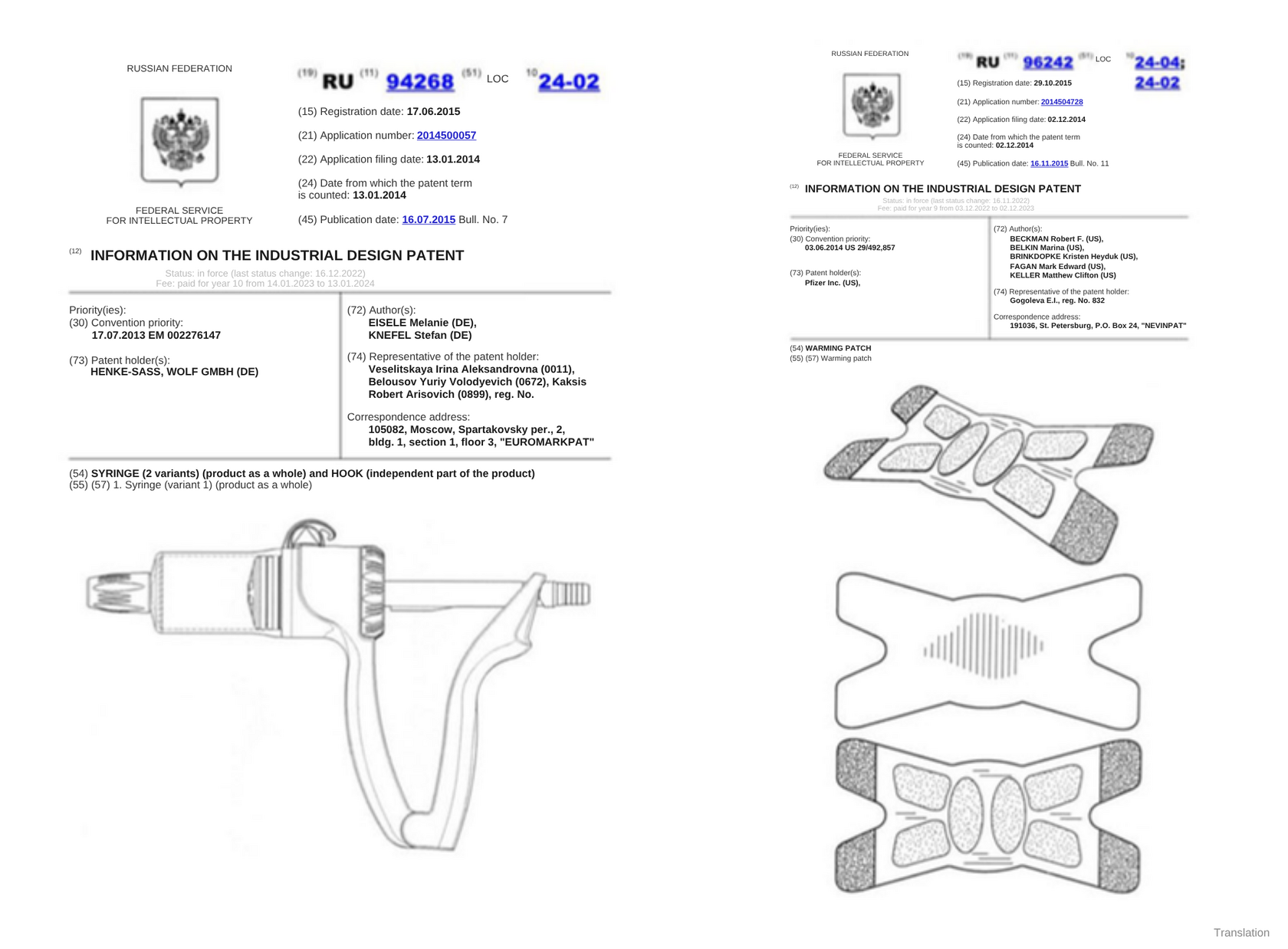
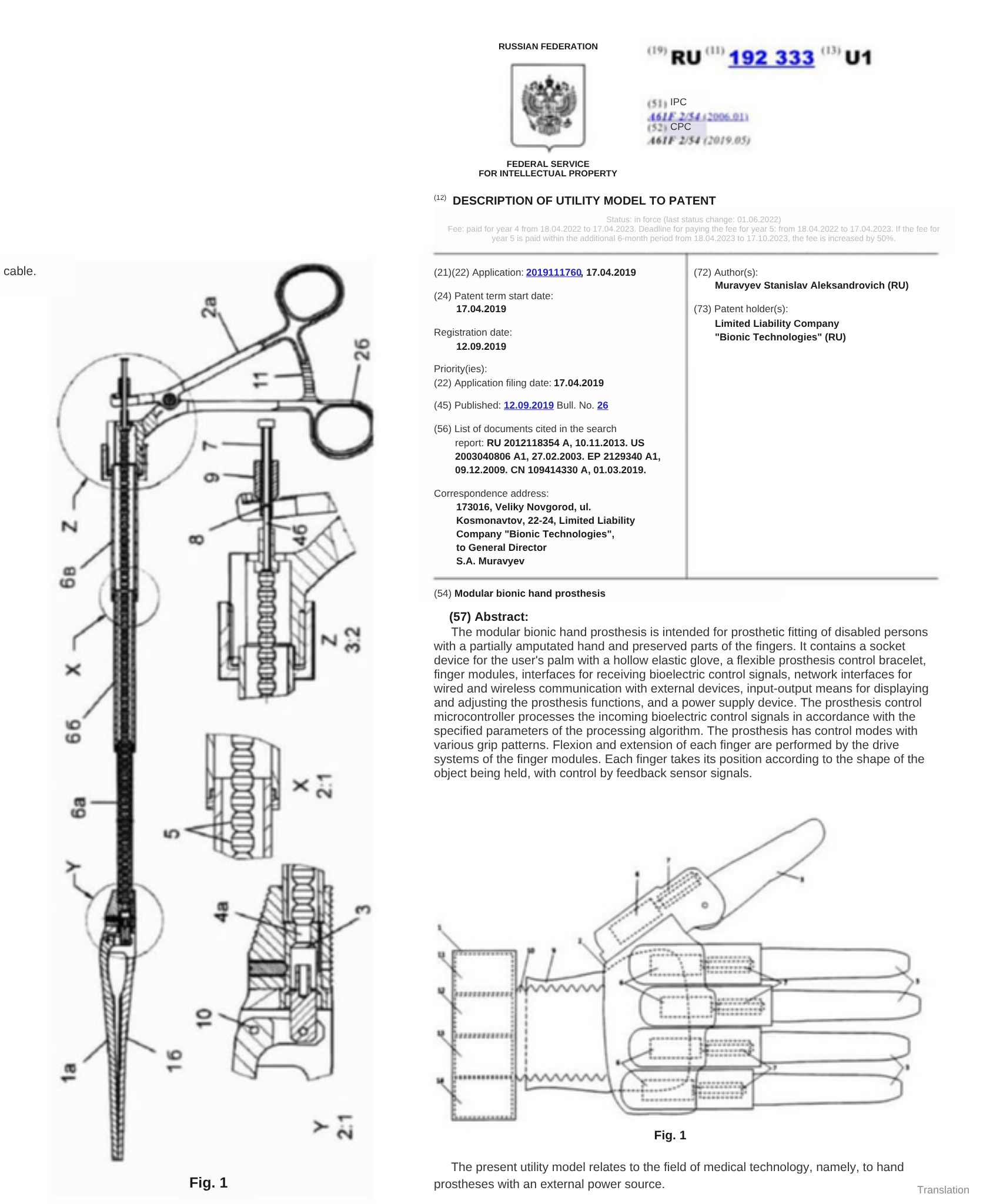
Utility model patent
A patent is issued for a device, which must meet the requirements of novelty and industrial applicability.
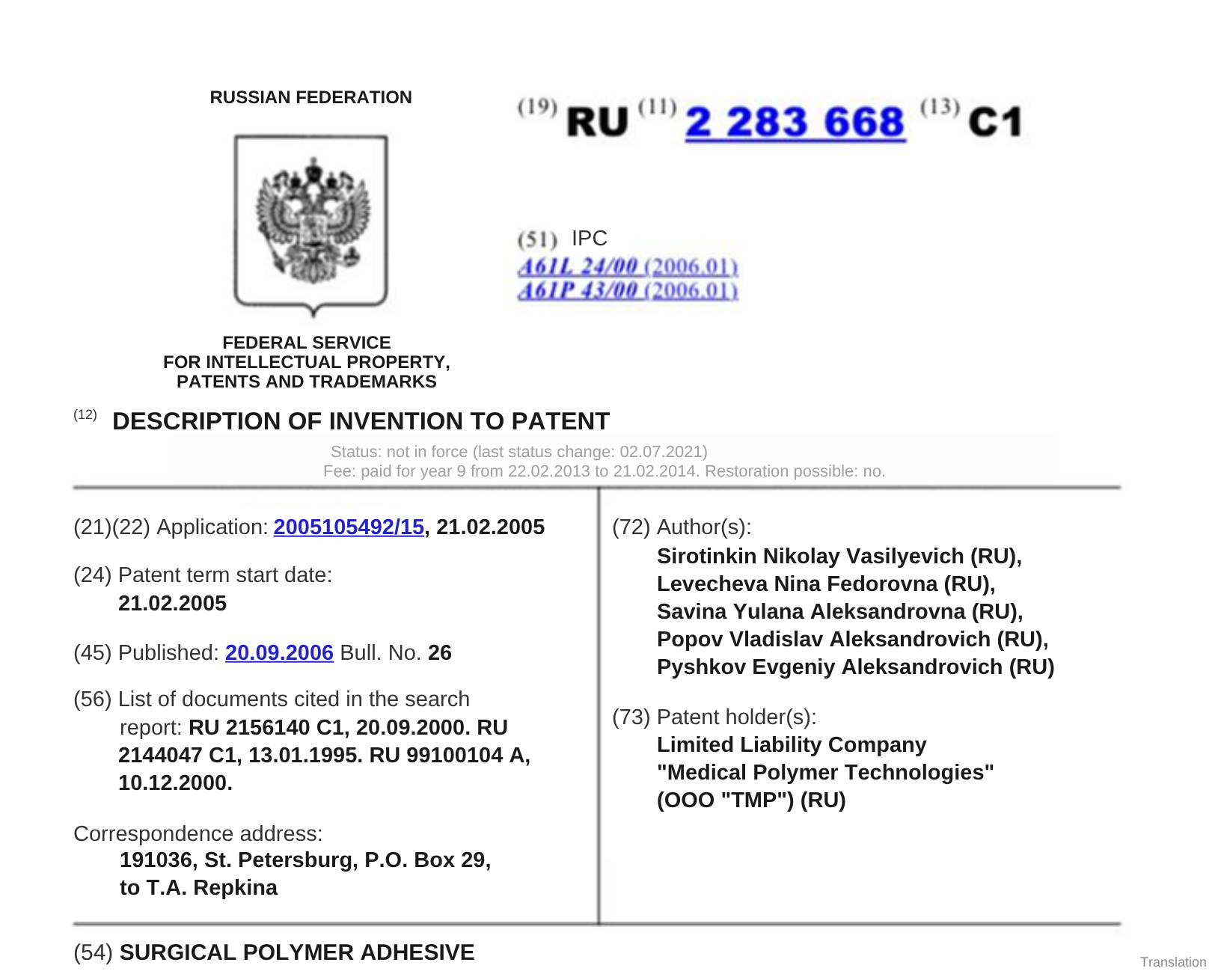
Invention patent
A patent is issued for a product, a method, or a use.
This is the most complex patent, since the requirements for it are higher.
The object of patenting must meet the requirements of novelty, inventive step, and industrial applicability
Debunking myths about patents
- A patent is not proof of the quality of the patented invention
- A patent is not proof of safety
- A patent is not proof of effectiveness
- A patent is not the same thing as a registration certificate: it is issued for a new object, and that is not the same thing as an existing one
- A patent is not issued for just anything, and it is by no means a simple piece of paper.
- A patent protects your development, but if the patent is poorly written, the protection will be weak.
- A patent does not automatically guarantee millions or billions for a development
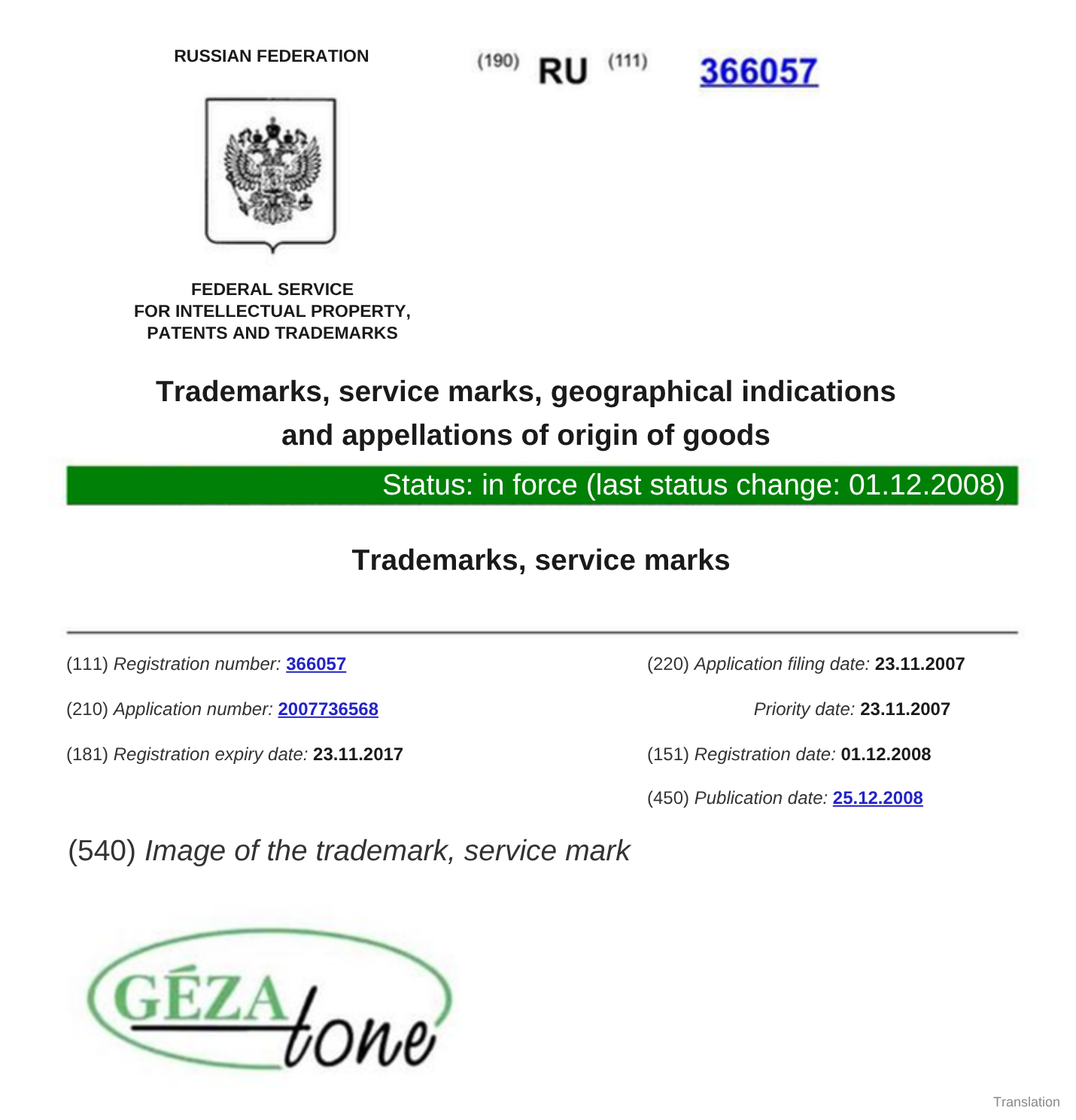
What is a trademark?
A trademark is words or images registered with Rospatent (FIPS).
It is also called a brand, a trade mark, or a commodity mark.
Company names, product names, slogans, logos, and so on can be registered as a trademark.
- R in a circle ®
A warning sign that is applied when the name is registered as a trademark in the territory of the Russian Federation. It is not mandatory. - The TM sign (trademark)
The ™ sign is usually used at the point when the trademark registration application has already been filed with the patent office, but the examination has not yet been carried out.
In the Russian Federation it has no legal force and has found no use.
For more details: Civil Code of the Russian Federation, Part 4, Chapter 76. Rights to Means of Individualization of Legal Entities, Goods, Works, Services, and Enterprises.
Main characteristics of a trademark
Far from all words and/or images are registered as a trademark. A candidate for a trademark must not be similar to other trademarks and must comply with the Law.
A trademark is registered for a specific country. A trademark registered with Rospatent is valid in the territory of the Russian Federation.
The term of validity of a trademark is 10 years, but it can be renewed an unlimited number of times.
A trademark is registered for specific goods and services.
The trademark registration process takes place at Rospatent and takes approximately 6–8 months.
Why register a trademark?
- The right to use the designation. After the designation is registered as a trademark, you become its sole right holder. And you need not fear trolls.
- Distinctiveness of a specific product. To set it apart from competitors in the minds of consumers, competitors, and in your own mind.
- The right to prohibit others from using it. Counterfeits, entry in the Customs Register, a ban on parasitic use.
Patents and trademarks are an important component of intellectual property
I hope that this introduction to intellectual property will make you think and pay attention to the trademarks and patents of other market participants.
Useful links
Website of "Rospatent (Federal Service for Intellectual Property)"
https://rospatent.gov.ru/ru (in Russian)
Website of "FIPS (Federal Institute of Industrial Property)"
https://new.fips.ru/ (in Russian)
Website of "EAPO (Eurasian Patent Organization)" https://www.eapo.org/ru/ (in Russian)
Website of "WIPO (WIPO Representation in the Russian Federation)"
https://www.wipo.int/about-wipo/ru/offices/russia/ (in Russian)
Author of the article: Anna Lapa

I have extensive experience in intellectual property
10+ years in the field of intellectual property
— 12+ years in biotechnology
— Worked in Russian and international pharmaceutical companies
— Completed in-person professional development in Europe and the USA
Superpower: X-ray vision for spotting potentially patentable objects
My name is Anna Lapa. I am the Chief Intellectual Property Specialist at a biotechnology pharmaceutical company, a manufacturer of medical devices. Every day at work I deal with the intellectual property of the company and its partners.
I am very glad that you are interested in intellectual property, because it is the fastest-developing branch of law in recent years.
It used to be that the defense and protection of one's intellectual property was considered a privilege of large companies, and most often foreign ones. Now, in connection with the rapid growth of startups, the development of small business, and the vigorous activity of creative self-employed citizens, careless handling of intellectual property, both your own and other people's, can lead to serious losses and even to losing your business or career.
That is why studying and applying knowledge about intellectual property is more relevant than ever.


